‹ BackNewsPublic blockchain

Public blockchain

ZetaChain votes to shut down its L1 and move ZETA and Anuma to Solana
Bitcoin
2026-09-21 08:16:20

TBC bets UTXO itself can become a programmable execution layer

TuringBitChain, or TBC, is making a case for a different path to Bitcoin-style programmability: keep the SHA256 proof-of-work and UTXO model, but extend what transactions and scripts can verify so state can move forward inside contract UTXOs rather than inside a global account tree. The idea is not to bolt an Ethereum Virtual Machine onto Bitcoin, and not to move execution to a sidechain or rollup. Instead, TBC uses components described as TuringTXID, TuringContract and BVM to let scripts inspect parent-child transaction relationships, validate selected historical fields, and constrain how successor outputs must be formed. The analysis argues that the real test is not the architecture diagram but whether outside developers can inspect code, reproduce benchmarks and verify audit trails. TBC has already published TBCNODE and a JavaScript smart contract SDK called tbc-contract, with support for on-chain data queries, UTXO retrieval, transaction building, signing and broadcasting, plus workflows for MultiSig, NFT, FT and Pool use cases. At the same time, the article notes that documentation consistency, local debugging, indexing services, testing frameworks and third-party tutorials still need work. It also cites two August 2026 audits of TBCNODE by CertiK and SlowMist, both of which disclosed findings and remediation status, while stressing that audits are snapshots rather than permanent guarantees of security or performance.

310
TBC bets UTXO itself can become a programmable execution layer
Sui says confidential transfers keep amounts private while settling on a public blockchain
Arc
2026-09-15 09:35:00

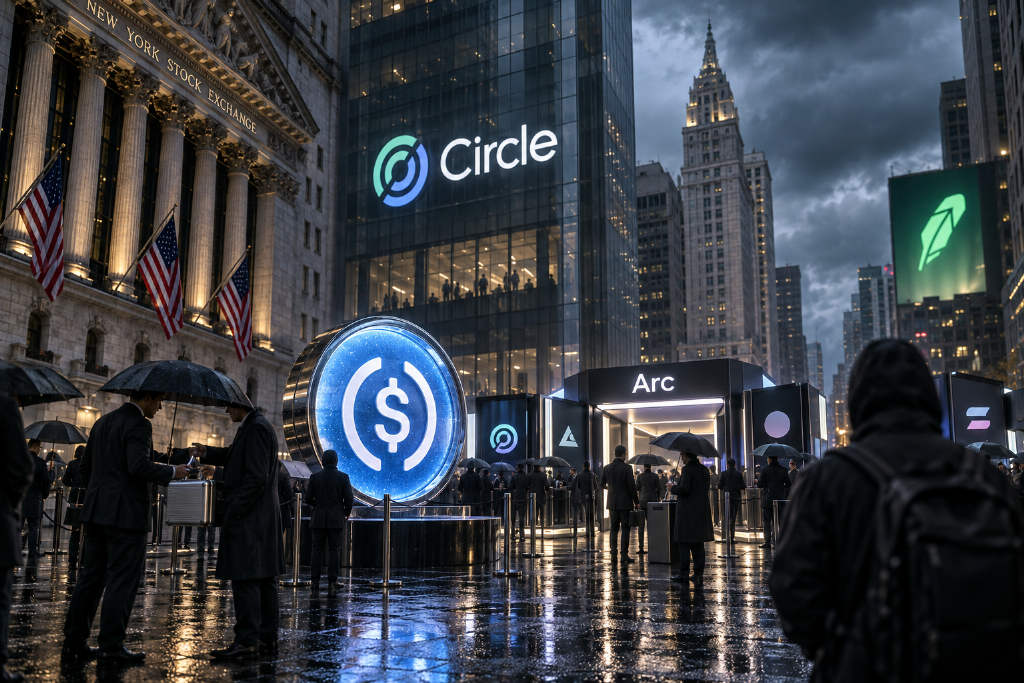
Arc heats up before mainnet launch as USDC trades at a premium and launchpads crowd in

Arc’s mainnet is scheduled to go live on Sept. 16, but the contest for liquidity and attention has already begun. Ahead of launch, USDC tied to the ecosystem has been changing hands at a premium, and some traders have reportedly been buying the stablecoin in the OTC market to prepare for day-one positioning. At the same time, dozens of launchpads are trying to secure early distribution and meme-coin traffic inside the Arc ecosystem. The setup has drawn comparisons with Robinhood Chain, whose meme-driven wealth effect helped it pull in users and capital quickly after launch. Arc, backed by Circle and built around stablecoins and financial infrastructure, has also assembled a notable institutional lineup. Its validator set includes BlackRock, DTCC, Visa, Mastercard, ICE, Standard Chartered, SBI, MoneyGram and Galaxy, while protocols such as Uniswap, Aave, Morpho, Curve and Euler have announced integrations. Still, Arc’s path may not mirror Robinhood Chain’s. The two networks share a finance-first origin and both use EVM architecture, but their user funnels and business priorities differ. Arc is being positioned as infrastructure for stablecoin settlement, FX, tokenized Treasuries, money market funds and institutional payments. It also uses an encrypted mempool rather than a public one, limiting common frontrunning patterns. Those differences could shape how much meme speculation Arc can sustain after launch.


800
Arc heats up before mainnet launch as USDC trades at a premium and launchpads crowd in
Pools says it has partnered with Arc as the chain’s first launchpad
Solana says it processed 5 billion transactions in August, with Alpenglow targeted for October
Robinhood and Circle highlight a shift in why companies launch blockchains
Sun Yuchen marks the 8th anniversary of Tron Virtual Machine launch